
Affiliate marketing: what it is and how to start in Lithuania
On this page · 10
Affiliate marketing (in Lithuanian – affiliate marketingas, or partnerystės rinkodara) means earning by recommending other people's products: you share a personal link or a discount code and receive a commission for every sale. You need neither your own product nor any investment, but income grows slowly, and commissions are paid out only after the sales have been verified.
Affiliate marketing (in Lithuanian, partnerystės rinkodara) is a way to earn by recommending other people's products: you get a personal link or a discount code, you share it, and when someone buys, a commission is credited to you. “Affiliate marketing” is searched for about a thousand times a month in Lithuania, yet most of the information is in English and about US programmes.
This guide is about affiliate marketing in Lithuania: how it works technically, how to choose a programme, how to earn without a website, how much you can realistically earn and how commissions are taxed.
In short
- Being an affiliate means a commission for a sale made through your link or code. You need neither your own product, nor a warehouse, nor customer service.
- The commission can be a percentage of the sale, a fixed amount or a reward for reaching a certain threshold.
- Sales are verified first and only then paid out – this protects against returns and fraud.
- Commissions are income, so ongoing activity has to be made official.
Read in order or pick a topic
- 01
 Next chapterAffiliate programmes: how to choose an affiliate programmeHow to choose an affiliate programme: what to compare – commission, tracking period, checks and payouts, how direct programmes differ from networks, and whether Amazon affiliate suits Lithuania.3 min read
 - 02
 Discount codes: how they work and how to earn by sharing themWhat a discount code is, how it works in an online shop, how it differs from an affiliate link and how affiliates earn by sharing personal discount codes.3 min read
 - 03
 Affiliate marketing without a website: social networks, groups and emailsHow to earn as an affiliate without a website: Facebook and Instagram, TikTok, YouTube, themed groups, newsletters and messages – what the platforms allow and how not to lose trust.3 min read
 - 04
 How much you can earn from affiliate marketing and how commissions are taxedWhat affiliate income depends on, how to calculate possible earnings, when commissions are paid out and how affiliate income is taxed in Lithuania.3 min read
 - 05
 Affiliate fraud: stolen cards, fake sales and why commissions are not paid out straight awayHow fraud is committed in affiliate programmes: purchases with stolen cards, self-purchases, fake clicks. Why commissions are held for 30 days or more and how programmes protect themselves.6 min read
How affiliate marketing works
Three parties take part in an affiliate arrangement: the seller, who has the product, the affiliate, who recommends it, and the buyer. Between them sits a tracking system that records that the buyer came through your recommendation.
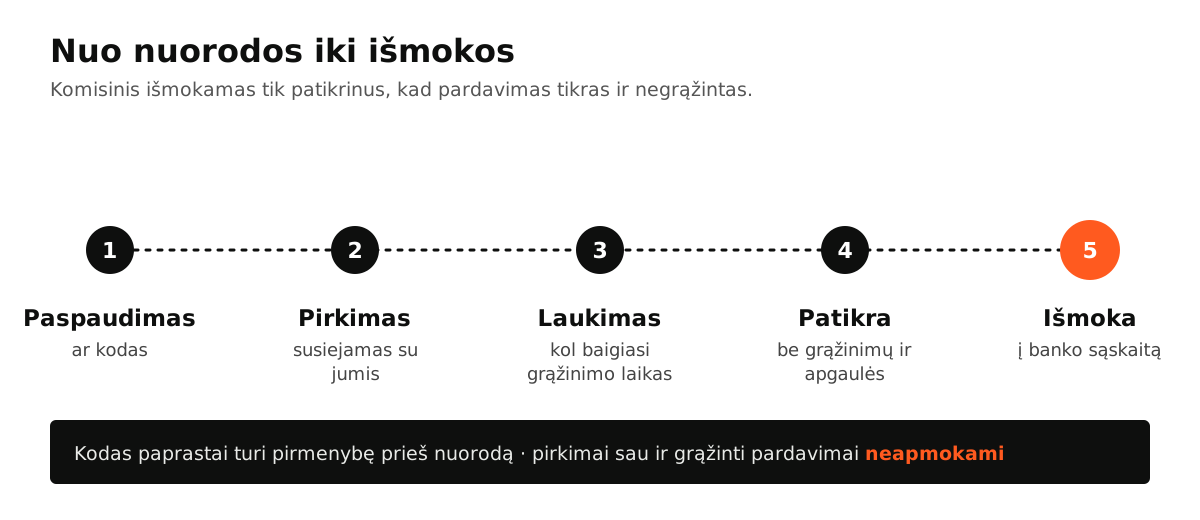
- Click or code. The buyer clicks your link or enters your discount code when buying.
- Purchase. The system links the purchase to you. If the buyer uses a code, it usually takes priority over the link.
- Waiting period. The commission is held as “pending” for a while, until the buyer's right to return the product expires.
- Check. The sale is checked to make sure it is genuine: no return, no purchase for yourself, no fraudulent traffic.
- Payout. Confirmed commissions are paid out to a bank account.
Types of commission
| Type | How it works | Where it is most common |
|---|---|---|
| Percentage of the sale | You receive a share of the purchase amount | Goods, digital products, courses |
| Fixed amount | A set amount for every sale or sign-up | Services, subscriptions, apps |
| Threshold (tiered) | A reward when the referred customer reaches a certain turnover or number | Business services, platforms |
Why affiliate marketing suits beginners
- No investment needed – signing up to affiliate programmes is usually free.
- No product of your own needed – you recommend what is already being sold.
- No customer service needed – the buyer is served by the seller.
- Content works for a long time – a well-written post or a video can keep selling for months.
The downside is that income grows slowly and depends on the audience's trust. In the first month there may be only a handful of sales.
How to choose an affiliate programme
The most important thing is that the product suits your audience and that you would recommend it even without a commission. Compare programmes by commission, tracking period, check and payout terms, and also by how much help the seller gives affiliates: ready-made texts, photos, discount codes. More detail is in the part of the guide on affiliate programmes.
Link or discount code
A link is convenient in a blog, a description or a message. A discount code works where a link cannot be placed: in a video, in Stories, in a live conversation, even on paper. In addition, a code gives the buyer a reason to buy now. Many affiliates use both – see the part of the guide on discount codes.
Affiliate marketing without a website
You do not need a website: many affiliates earn on social networks, in themed groups, in newsletters or simply by recommending products to people they know. How to do this without breaking platform rules and without losing trust is covered in the part of the guide on affiliate marketing without a website.
Honest affiliate marketing
What not to do
- do not buy for yourself through your own link – such sales are rejected;
- do not advertise the seller's brand in search ads if the programme does not allow it;
- do not hide the fact that you receive a commission – affiliate links must be clearly labelled;
- do not promise product features that the seller does not promise.
Taxes
Commissions are income. When affiliate activity becomes ongoing, it has to be made official: most often as self-employment (individuali veikla). Which form suits you is explained in the ACS.lt article “Self-employment: registration certificate or business certificate”, and more on the taxation of commissions is in the part of the guide on affiliate income and taxes.
Frequently asked questions
What is affiliate marketing?
Affiliate marketing means earning by recommending other people's products. For every sale made through your link or code you receive a commission.
Do you need a website for affiliate marketing?
No. You can share links and codes on social networks, in groups, in newsletters or by recommending products to people you know.
How much can you earn as an affiliate?
It depends on the audience, the product and the commission. At the start income is usually small, but it grows as your content accumulates and the audience comes to trust you.
When are commissions paid out?
Usually after a waiting period and a check, once the buyer's right to return the product has expired and the sale has been confirmed as genuine.
Do you have to pay tax on commissions?
Yes. Commissions are income, and ongoing affiliate activity has to be made official, most often as self-employment.
Sources
- Valstybinė vartotojų teisių apsaugos tarnyba. VVTAT primena, kaip „influenceriai“ turi žymėti reklamą socialiniuose tinkluose
https://vvtat.lrv.lt/lt/naujienos-ir-pranesimai-ziniasklaidai-377/vvtat-primena-kaip-influenceriai-turi-zymeti-reklama-socialiniuose-tinkluose-1692/ - Valstybinė mokesčių inspekcija. Kuri veiklos forma man tinkamesnė
https://www.vmi.lt/evmi/kuri-veiklos-forma-man-tinkamesne